

What Value Can a Buying Agent Add in Today’s Prime Central London Property Market?
In a more price-sensitive market, the value of buyer representation is not simply access to more property. It is knowing what to look for, what to question, how to position an offer and how to keep the purchase moving once a deal is agreed.
By Archie Gillies, Senior Sales & Lettings Agent, Anderson Rose - Prime Central London
Buying property in Prime Central London is rarely as straightforward as finding the right listing and agreeing a price.
A successful purchase involves much more. The buyer needs to understand whether a property is correctly priced, whether the location genuinely suits their requirements, what else may be available, how motivated the seller is, how an offer should be positioned and how the transaction should be managed once a deal is agreed.
That is particularly relevant in the current market. LonRes reported that achieved prices in Prime Central London were 9% lower year-on-year in the second quarter of 2026. Across prime London more broadly, the average discount from the original asking price has reached 10.4% in 2026.
Those figures might suggest that buyers can simply make lower offers and wait for sellers to move. In practice, it is much more nuanced. LonRes also reported an average discount of only 3.9% for properties selling within three months, compared with 19.3% for properties taking more than a year to sell.
A well-priced property that has recently come to market needs a very different approach from one that has been available for twelve months. For a buyer, knowing the difference is where good advice becomes valuable.
The selling agent represents the seller
The simplest way to explain buying agency is to look at who each adviser represents. A selling agent is instructed by the owner. Their job is to represent the seller’s interests and achieve the strongest possible outcome for them.
When Fin Chesterman and I are retained by a buyer, we are on the other side of that transaction. We are there to advise the purchaser throughout the search, assess opportunities, understand value, negotiate on their behalf and keep the purchase moving through to completion.
In my experience, the value is rarely created at one single point. It is built gradually, through better decisions at each stage.
A good search starts with the right brief
A buyer might initially tell us they want a two-bedroom apartment in Marylebone with a budget of £1.5 million. That is a useful starting point, but it is not yet a complete brief.
We need to understand why Marylebone appeals, how the property will be used, where the buyer works, how often they commute, whether outside space matters, how important natural light is, whether they need a lift or porter, how long they expect to own the property and where they are prepared to compromise.
Those answers can change the search considerably. An international buyer may begin with Mayfair simply because it is the area they know best, but once their day-to-day requirements are understood, Belgravia, Marylebone, Chelsea, South Kensington or another part of London may make more sense.
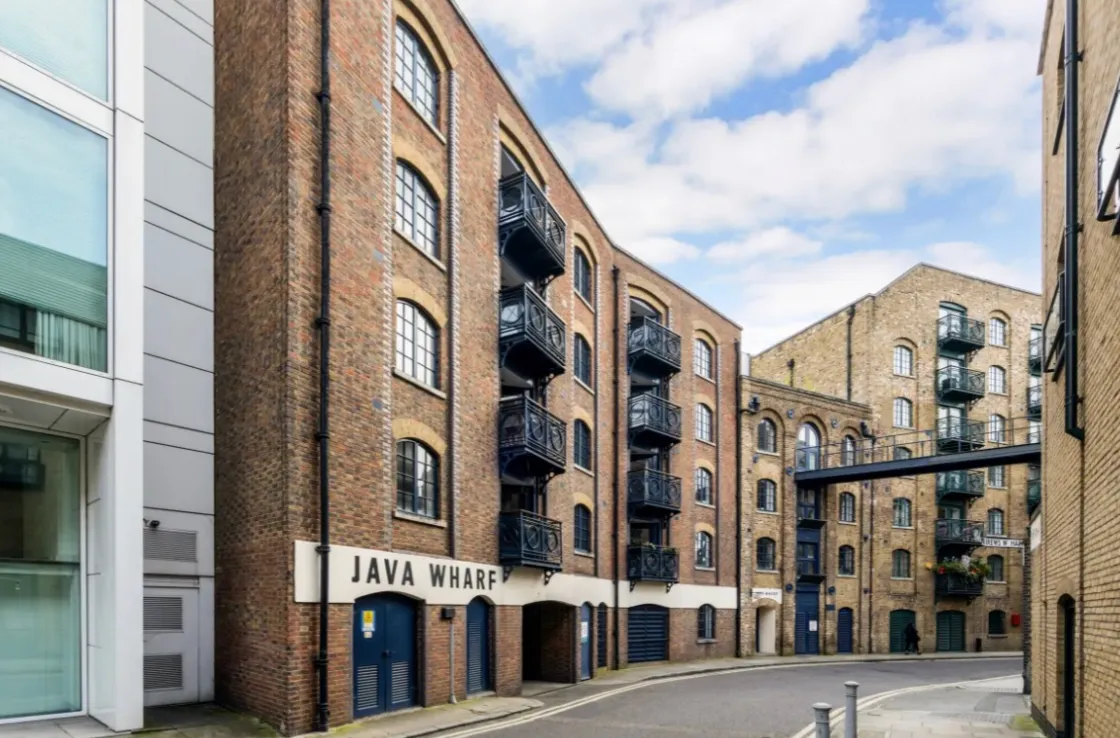
The same is true outside Prime Central London. Someone working in the City may find that Tower Bridge, Bermondsey or Borough gives them a better day-to-day life than the areas they first had in mind.
The point is not to steer a client towards a particular postcode. It is to understand what the purchase needs to achieve and build the search around that.
The market is wider than the property portals
The main portals are important and they form part of almost every search, but they are not the whole market.
A retained search can involve direct conversations with selling agents, LonRes and other professional market information, existing agency relationships, properties being prepared for launch, private conversations with owners and landlords, developers and targeted approaches to properties that are not publicly advertised.
At Anderson Rose, our sales, lettings and property management activity also gives us useful day-to-day market intelligence. We are speaking with owners, landlords, buyers, tenants and other agents across the business, rather than looking at the market only through one buying mandate.
There is also more for buyers to navigate at the moment. LonRes reported that new sales instructions across prime London in July were 26.2% above the average July level recorded between 2017 and 2019.
More choice is helpful, but it also means more time spent separating genuine opportunities from properties that are overpriced, compromised or simply wrong for the brief.
A significant part of a retained search is doing that filtering before the client needs to get involved. We speak with selling agents, establish the relevant background, assess each property against the brief and decide whether it is worth the client’s time. Where appropriate, we can preview properties ourselves, conduct live video viewings and organise concentrated viewing days around the client’s availability.
Off-market access is sometimes overplayed in the buying agency world. No adviser can honestly promise that the right property will be found privately. The real value is having someone actively building the market around the buyer rather than simply waiting for the right listing to appear online.
A good buying service should not mean showing a client more property. It should mean showing them better property.
Representation can also strengthen a buyer’s position
One of the less obvious benefits of a retained buying agent is the way a buyer is presented to the market.
Selling agents and their clients want to know who the buyer is, how the purchase will be funded, whether there is a chain, how quickly they can proceed and how serious they are.
When we approach another agent on behalf of a retained client, we already understand the buyer’s requirements, timing and purchasing position. They have also made a clear commitment by appointing professional representation.
Our experience representing sellers as well as retained buyers is particularly useful here. Price matters, but it is not the only thing a seller considers. Funding, chain position, solicitor readiness, timing, flexibility and the proposed exchange period can all influence how an offer is received.
In a competitive situation, the strongest offer is not always simply the highest number. A buyer may improve their position by offering the seller greater certainty. Sometimes the price needs to move, and sometimes the right advice is that the property no longer represents good value.
That does not create an automatic advantage, but credibility matters. As selling agents ourselves, we know how important it is to present a credible buyer clearly, particularly when several parties are interested or an opportunity has not yet reached the wider market. The aim is to understand the seller’s priorities as far as possible and keep emotion from dictating the strategy, especially during best and final offers.
This can be especially useful for international buyers who may otherwise be approaching the Prime Central London market without established relationships.
Price needs to be assessed properly
Pricing advice is particularly important in a market where headline averages can obscure significant differences between individual properties. A blanket strategy based on market-wide discounts makes very little sense.
Before advising on an offer, we look at relevant comparable sales, asking-price history, competing stock, price per square foot where useful, condition, tenure, service charge, floor, outlook, natural light, the building itself and current demand.
An asking price is a marketing position. The job is to understand where the property sits in the market and advise accordingly.
The objective is not to negotiate the biggest possible percentage reduction. It is to secure the right property on the right terms.
Looking beyond the viewing
A property can present very well and still have issues that deserve closer attention. In Prime Central London, apparently small details can have a meaningful effect on both value and future saleability.
The building matters. The street matters. The position within the building matters.
We look at management, service charges, planned works where known, previous transactions, floor level, outlook, natural light, traffic, neighbouring uses and the immediate environment.
Marylebone, Mayfair, Belgravia, Chelsea, Kensington and South Kensington all contain considerable variation within relatively small areas. Two properties with a similar floor area and bedroom count can be very different purchases.
This does not replace the work of a solicitor or surveyor. Our role is to identify the points that need attention, ask the right questions and help the buyer understand the property in the context of the wider market.
The work continues after an offer is accepted
An accepted offer is an important milestone, but it is not the end of the purchase.
There will be a solicitor, mortgage broker, lender, surveyor, management company and selling agent all working on different parts of nearly every transaction. If nobody is keeping an eye on the overall process, momentum can be lost quickly.
We stay involved throughout. That can mean coordinating the survey, following up on management information, keeping the seller’s timing visible, speaking with the selling agent, making sure agreed terms are reflected correctly and identifying potential issues before they become larger problems.
Our job is to see the bigger picture and ensure our clients’ interests are protected throughout.
The purchase may only be one part of the move
For clients relocating to London, the acquisition itself may be only one part of what needs to be organised.
They may need temporary accommodation, removals, storage, contractors, furnishing, property management or introductions to mortgage, legal, tax or immigration specialists.
The level of support varies. For one client, the practical requirement may be relatively simple. For another, it may involve a full relocation and several professional advisers. We have built a network around the business that allows us to help with both.
This is also relevant for international families buying for children studying in London. Being close to UCL, Imperial College London, LSE or King’s may form part of the brief, but the best property is not always the one closest to the university.
We can look at the wider area, transport, lifestyle, long-term suitability and how the property may continue to work for the family once the student has finished their studies.
Buying agency should not only be relevant at the very top of the market
Buying agents have traditionally been associated with the upper end of Prime Central London.
There is clearly a role for professional representation at £10 million, £15 million or £20 million. But I do not believe the value of good advice suddenly begins at a particular purchase price.
A £1 million purchase may be the largest financial commitment somebody has ever made. A first-time buyer may need more guidance than somebody buying their fifth London property.
At Anderson Rose, we want the buying agency service to be relevant across a wider range of budgets, generally from around £1 million upwards, where we believe we can add genuine value.
That could be a first-time buyer, a time-poor professional, an international family, parents purchasing for a child studying in London, an investor or somebody acquiring a substantial home in Prime Central London.
The service should reflect what the client needs and the complexity of the purchase, not an arbitrary price threshold.
London-wide, with particular expertise in Prime Central London
Fin Chesterman and I lead the Anderson Rose buying agency service from our Prime Central London office at 91 Wimpole Street.
We have particular expertise across Marylebone, Mayfair, Belgravia, Chelsea, Kensington, South Kensington, Bayswater and St John’s Wood, but the search is not limited by our office location.
We represent buyers across London, including Fitzrovia, Bloomsbury, Notting Hill, Hampstead, Fulham, Parsons Green, Tower Bridge, Bermondsey, Borough and other areas where the brief takes us.
The right location depends on the client, and our retained search follows the brief wherever in London the strongest fit is found.
So, where does a buying agent add value?
For me, the value lies in having one adviser responsible for the buyer’s side of the process, from defining the search and assessing opportunities through negotiation, due diligence and completion.
The current Prime Central London market gives buyers opportunities, but it also rewards judgement. Individual properties need to be assessed on their own merits rather than through headline market statistics or a blanket negotiating strategy.
Ultimately, our job is straightforward: to help clients buy the right property for them, on the right terms, and make the process as informed, efficient and well managed as possible.
Considering a purchase in Prime Central London or elsewhere in London?
Anderson Rose’s Buying Agency Service provides retained search, acquisition and relocation support from our Prime Central London office.
If you are considering a purchase, whether you are at the beginning of your search or already actively viewing, please get in touch with our Prime Central London team. We would be very happy to discuss your requirements, how we could assist and the fee structure involved.
Sources
LonRes, Prime London Market Update, Summer 2026; and LonRes, Prime London Market Dashboard, August 2026.



Share this with
Email
Facebook
Messenger
X
Pinterest
LinkedIn
Copy this link